Buying Guides
SanDisk Memory Card Buying Guide: SD vs. microSD and Speed Classes Explained
Learn how to compare SanDisk SD and microSD cards by capacity, speed class, device compatibility and application for business purchasing.
SanDisk Memory Card Buying Guide: SD vs. microSD and Speed Classes Explained
SanDisk offers memory card products for digital cameras, smartphones, tablets, action cameras, surveillance equipment and other compatible electronic devices.
For distributors, wholesalers and e-commerce sellers, memory cards are an important category within the removable flash storage market.
However, choosing the right card requires more than comparing capacity or brand.
Card format, speed classification, device compatibility and intended application should all be considered.
This guide explains the key factors to evaluate when selecting SanDisk SD and microSD cards for business purchasing.
1. SD vs. microSD: Understanding the Formats
SanDisk memory cards are available in different physical formats.
SD Cards
Standard SD cards are commonly used in:
- Digital cameras
- Camcorders
- Photography equipment
- Compatible recording devices
microSD Cards
microSD cards are smaller and are commonly used in:
- Smartphones and tablets
- Action cameras
- Security cameras
- Portable gaming devices
- Compact electronic equipment
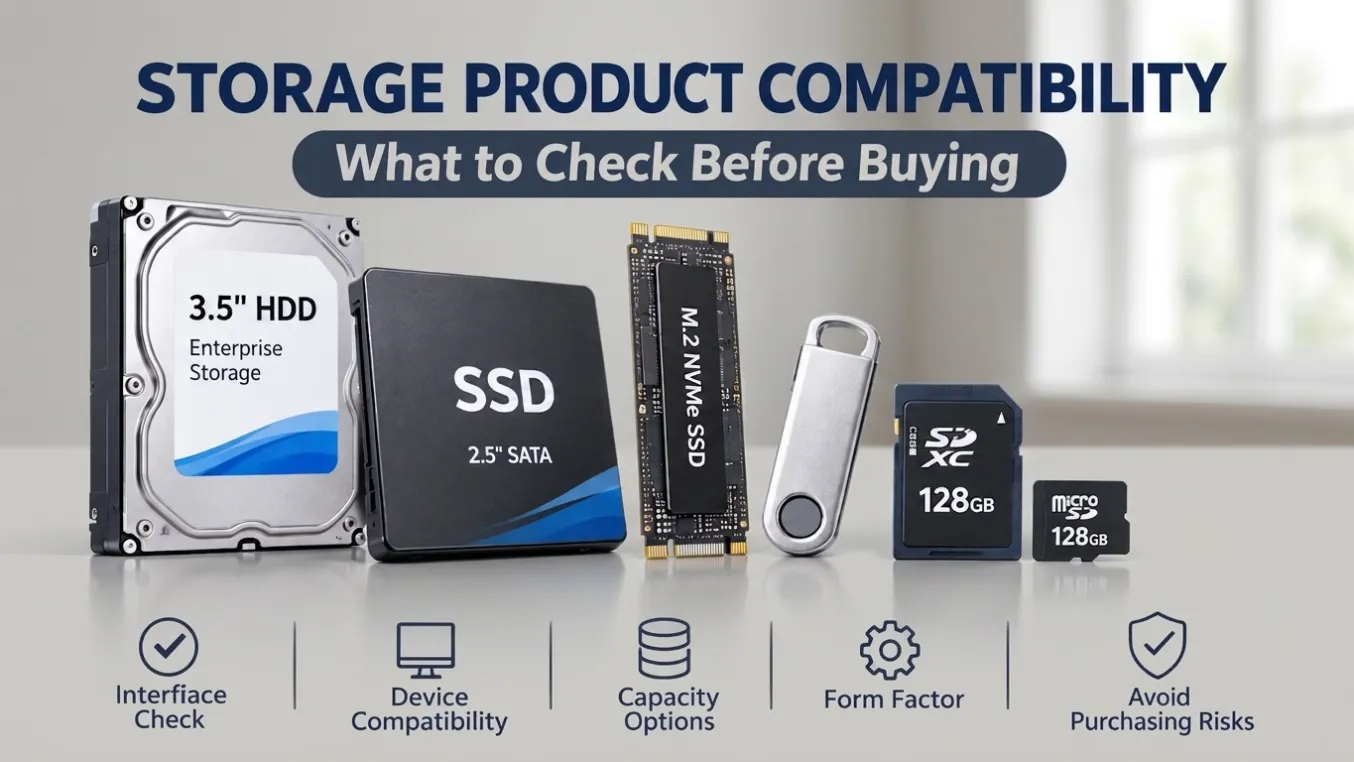
A microSD card can be used in a compatible SD slot with an appropriate adapter, but the host device must support the card format and capacity.
2. Understanding SD, SDHC and SDXC
Memory cards are divided into capacity standards.
SD
The original SD standard supports capacities up to 2GB.
SDHC
SDHC supports capacities above 2GB up to 32GB.
SDXC
SDXC supports capacities above 32GB up to 2TB.
The device must support the corresponding standard.
A card that physically fits into a slot may still be incompatible with an older device.
Always check the host device's supported memory card standard and maximum capacity.
3. Understanding Memory Card Speed Classes
Speed classifications help buyers identify the minimum performance requirements of a memory card.
Common classifications include:
Speed Class
Examples include Class 10.
UHS Speed Class
Common ratings include:
- U1
- U3
Video Speed Class
Common ratings include:
- V10
- V30
- V60
- V90
Application Performance Class
Some cards also carry A1 or A2 application performance ratings.
These classifications describe different performance characteristics and should be matched to the intended application.
For example, continuous video recording may require a suitable sustained write-speed rating.
4. Choosing the Right Card for Different Applications
Digital Photography
Photographers should check the camera's supported card format, capacity and recommended speed classification.
Video Recording
Video recording requirements depend on resolution, recording format and device specifications.
Check the manufacturer's recommended minimum card speed.
Smartphones and Tablets
Confirm the supported microSD format and maximum capacity of the device.
Surveillance Systems
For continuous recording, verify the card's suitability for the intended recording workload and the equipment manufacturer's requirements.
5. Comparing SanDisk Memory Card Products
SanDisk offers different memory card product ranges with varying capacities and performance specifications.
When comparing products, check:
- Exact product name and model
- SD or microSD format
- Capacity
- Speed class
- Read and write specifications
- Intended application
- Packaging and warranty conditions
Do not assume that all SanDisk cards have the same speed or durability specifications.
The exact model documentation should be used when preparing product listings or quotations.
6. What Wholesale Buyers Should Check Before Ordering
For distributors, wholesalers and marketplace sellers, product verification is important.
Before purchasing, confirm:
Check Item | Information to Confirm |
|---|---|
Brand | SanDisk |
Format | SD / microSD |
Capacity Standard | SD / SDHC / SDXC |
Capacity | Required GB or TB |
Speed Class | Class / UHS / Video Speed Class |
Application | Camera / Mobile Device / Surveillance |
Model | Exact product model |
Packaging | Retail or other packaging |
Quantity | Required order volume |
Destination | Target country |
For e-commerce sellers, accurate capacity and speed-class information is particularly important when creating product listings.
7. Building a Memory Card Product Portfolio
Distributors may consider different memory card formats and capacity options to serve different customer groups.
For example:
- SD cards for compatible cameras
- microSD cards for portable devices
- Different capacities for different price segments
- Different speed classes for different recording requirements
The right portfolio depends on customer demand, device compatibility and sourcing conditions.
Conclusion
SanDisk SD and microSD cards serve different device formats and storage applications.
Selecting the right card requires evaluating capacity standards, speed classifications, compatibility and the intended workload.
For wholesalers and distributors, confirming the exact product model and specifications before purchasing helps reduce product selection errors and after-sales issues.
Looking for Memory Cards for Wholesale Supply?
OV CHIP STORAGE supports business enquiries for branded memory cards and other storage products.
Share your required format, capacity, speed class, model, quantity and destination country with our team.