Buying Guides
Samsung SSD Buying Guide: SATA vs. NVMe for Business Buyers
Compare Samsung SATA and NVMe SSDs by interface, performance, compatibility and applications to make informed business purchasing decisions.
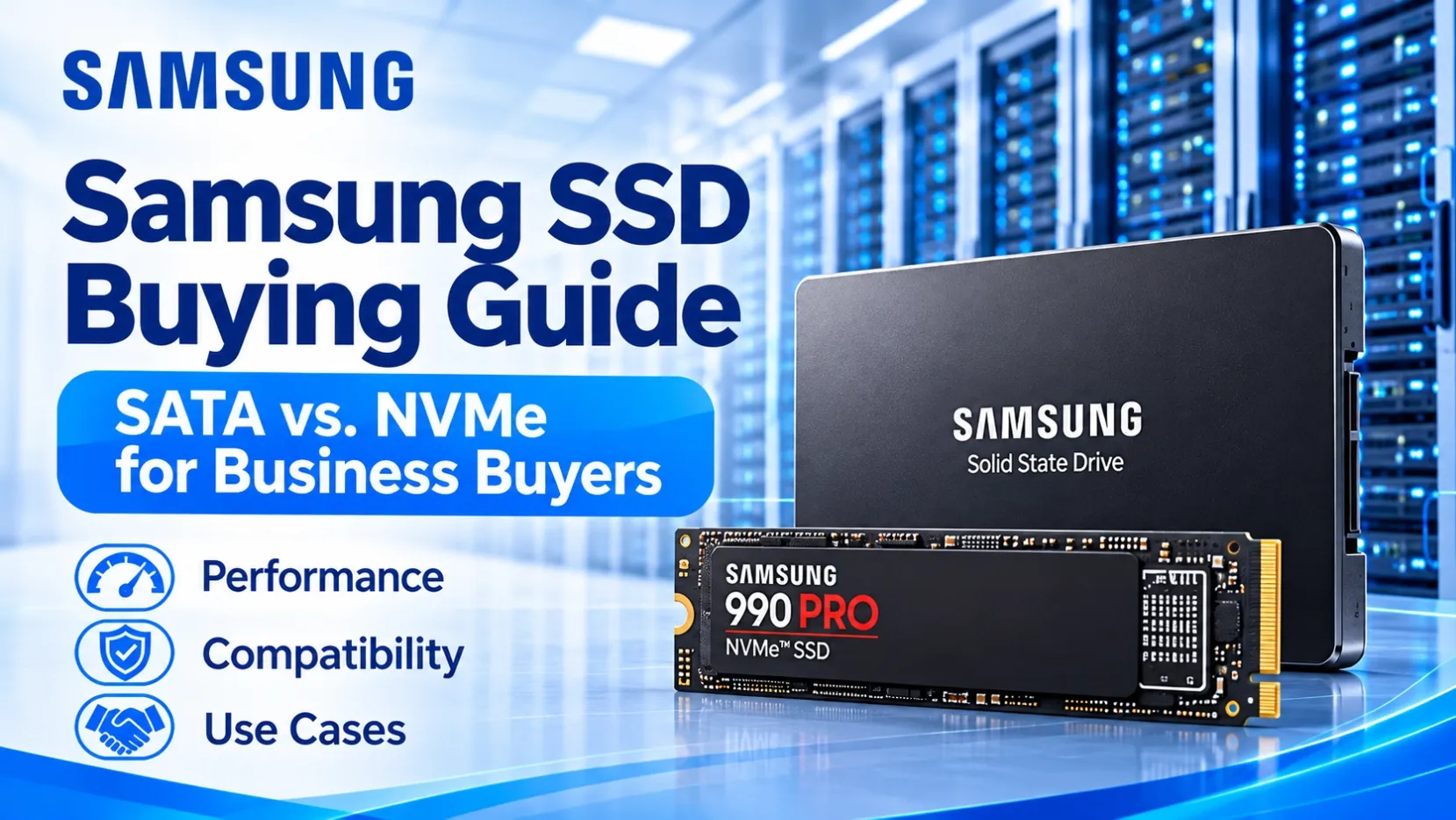
Samsung SSD Buying Guide: SATA vs. NVMe for Business Buyers
Samsung is a well-known manufacturer of solid-state storage products, offering SSD solutions for personal computers, business systems and professional applications.
For distributors, wholesalers, system integrators and e-commerce sellers, understanding the differences between SATA and NVMe SSDs is important when selecting products for different customer requirements.
Although both technologies use flash memory, they differ in interface, communication protocol, performance characteristics and compatibility.
This guide explains the key differences between Samsung SATA and NVMe SSDs and what business buyers should check before purchasing.
1. Understanding Samsung SATA SSDs
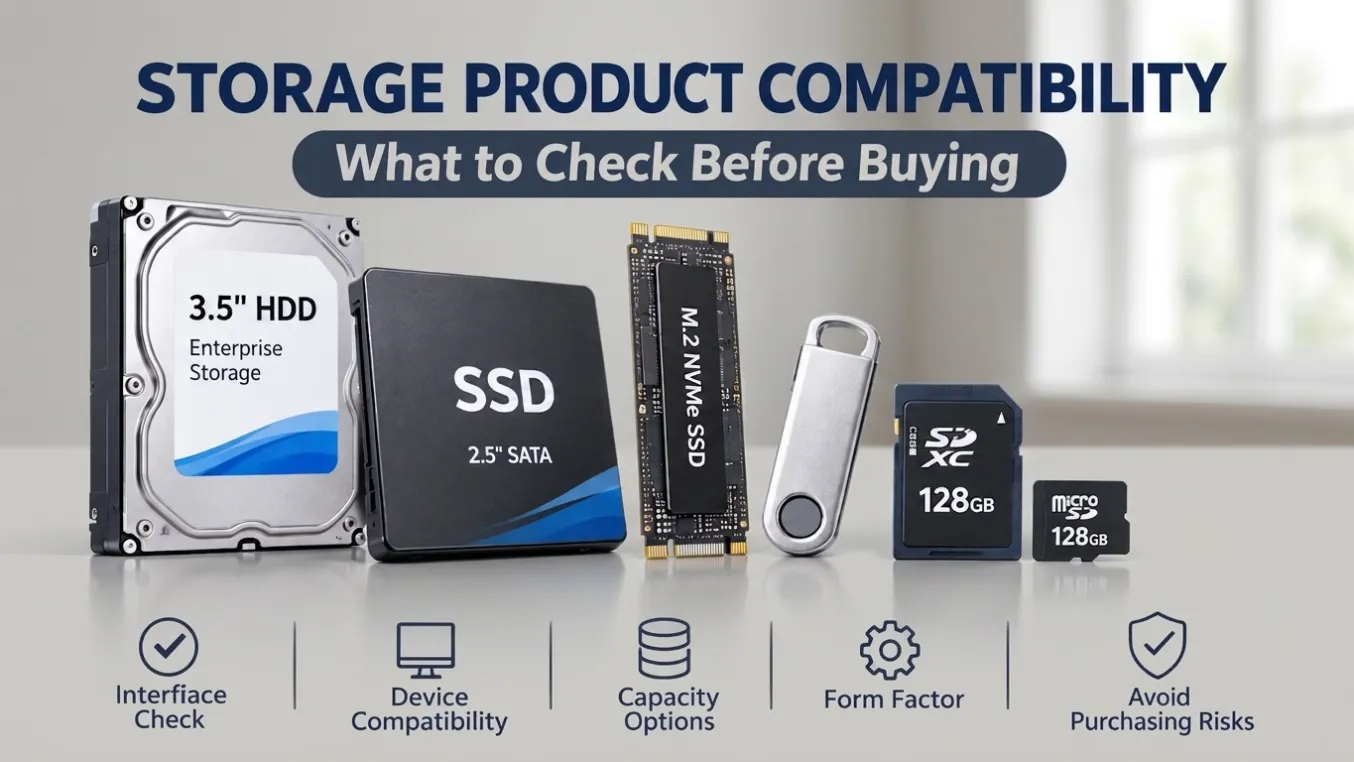
SATA SSDs use the SATA interface and are commonly available in the 2.5-inch form factor.
They are widely used for:
- Desktop computer upgrades
- Laptop storage replacement
- Office computers
- General business storage
- Systems with compatible SATA connections
SATA SSDs are often selected when customers want to replace traditional HDDs without changing the existing storage interface.
Before purchasing, confirm the device supports the required 2.5-inch form factor and SATA connection.
2. Understanding Samsung NVMe SSDs
NVMe SSDs use the NVMe protocol over a supported PCIe interface.
Many consumer and business NVMe SSDs use the M.2 form factor, although the exact physical design depends on the model.
NVMe SSDs are commonly considered for:
- Modern desktop computers
- Compatible business laptops
- Workstations
- Professional applications
- Systems requiring higher storage performance
Actual performance depends on the specific model, PCIe generation, controller, NAND flash and host system.
An M.2 connector alone does not guarantee NVMe compatibility. Some M.2 SSDs use SATA instead.
3. SATA vs. NVMe: Main Differences
Interface
SATA SSDs use the SATA interface, while NVMe SSDs communicate over PCIe using the NVMe protocol.
Performance
NVMe SSDs generally offer higher potential transfer performance than SATA SSDs.
However, actual performance depends on the drive model and host system.
Form Factor
2.5-inch SATA SSDs are common in traditional upgrade applications.
M.2 SSDs are compact and are available in different lengths, including 2230, 2242, 2260 and 2280.
Compatibility
A SATA SSD requires a compatible SATA connection.
An NVMe SSD requires a host system with a supported PCIe NVMe connection.
Buyers should verify the exact interface and physical dimensions before ordering.
4. How to Select the Right Samsung SSD
The right SSD depends on the target device and application.
For Desktop and Laptop Upgrades
A 2.5-inch SATA SSD may be appropriate for systems with compatible SATA drive bays.
For Modern Computers
An M.2 NVMe SSD may be suitable for systems that support PCIe NVMe storage.
For Professional Workloads
Buyers should compare the manufacturer's specifications for sequential performance, endurance, capacity and warranty conditions.
Do not select a drive based only on its advertised maximum speed.
5. What Business Buyers Should Check
Before purchasing Samsung SSD products, confirm:
- Exact model number
- Storage capacity
- SATA or NVMe interface
- Physical form factor
- Supported PCIe generation, where applicable
- Read and write specifications
- Endurance rating, where specified
- Warranty conditions
- Host system compatibility
For replacement projects, matching the exact model or confirming an approved alternative is particularly important.
6. Samsung SSDs for Wholesale and Distribution
For distributors and e-commerce sellers, a suitable SSD portfolio may include different capacities and interface types.
SATA SSDs can serve customers upgrading older systems, while NVMe SSDs address compatible newer platforms.
When developing a product range, consider:
- Target customer groups
- Supported computer platforms
- Required capacities
- Performance expectations
- Price positioning
- Product documentation
Product availability and specifications should be confirmed for each exact model before placing an order.
Conclusion
Samsung SATA and NVMe SSDs serve different storage requirements.
SATA SSDs remain useful for compatible traditional systems, while NVMe SSDs provide higher performance potential on supported PCIe platforms.
For business buyers, checking the exact model, interface, form factor and host compatibility helps reduce incorrect purchasing decisions.
Looking for Samsung SSDs for Wholesale Supply?
OV CHIP STORAGE supports business enquiries for branded SSDs and other storage products.
Share your required Samsung model, capacity, interface, quantity and destination country with our team.